
Leverage Artificial Intelligence to Enable Open Innovation and Business Resilience and Agility

Instructor
-
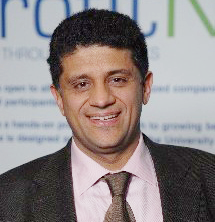 George TsekourasDr, DPhil, Director of CENTRIM
Dr. George Tsekouras is the Director of CENTRIM. He has led the research in the area of innovation and entrepreneurship in areas like peer-to-peer learning networks, innovation coaching, planning and implementing new product development strategies, fostering linkages with external research, open innovation for SMEs, public-private innovation partnerships and innovation in social enterprises.
He is the founder of a number of peer-to-peer learning networks in UK, Ireland, South Africa and Greece, which have supported more than 2,000 SMEs around the world. He was the coordinator of the RAPPORT consortium (www.rapport-project.eu), which looked at best practices to connect SMEs to the public or private research organisations. Currently, he works for a consortium that helps the European Commission to design the SME Instrument scheme, a new scheme to support innovation by European SMEs.
George has also worked in other innovation areas like innovation benchmarking, industry forecasting and business process re-engineering. He has a first degree in mechanical engineering and a DPhil in innovation management from SPRU at the University of Sussex. He is the author of a number of papers in academic journals, books and international conferences while he has designed and delivered many executives training and consultancy programmes on innovation-enabled entrepreneurship.



Instructor
-
George TsekourasDr, DPhil, Director of CENTRIM
Dr. George Tsekouras is the Director of CENTRIM. He has led the research in the area of innovation and entrepreneurship in areas like peer-to-peer learning networks, innovation coaching, planning and implementing new product development strategies, fostering linkages with external research, open innovation for SMEs, public-private innovation partnerships and innovation in social enterprises.
He is the founder of a number of peer-to-peer learning networks in UK, Ireland, South Africa and Greece, which have supported more than 2,000 SMEs around the world. He was the coordinator of the RAPPORT consortium (www.rapport-project.eu), which looked at best practices to connect SMEs to the public or private research organisations. Currently, he works for a consortium that helps the European Commission to design the SME Instrument scheme, a new scheme to support innovation by European SMEs.
George has also worked in other innovation areas like innovation benchmarking, industry forecasting and business process re-engineering. He has a first degree in mechanical engineering and a DPhil in innovation management from SPRU at the University of Sussex. He is the author of a number of papers in academic journals, books and international conferences while he has designed and delivered many executives training and consultancy programmes on innovation-enabled entrepreneurship.
Hourly Schedule
Day 1
- 07:45 – 08:45
- Thriving business: Why innovation?
- Introductions. What is innovation? How innovation is linked to business survival and business development?
- 08:45 – 09:45
- The rise of AI and its Business Value
- What is AI? The history of AI. AI: enhance high skills or replace low skills? How AI helps today business to evolve and become more competitive?
- 09:45 – 10:00
- Coffee Break
- 10:00 – 11:00
- Our Business Model: Assessing Strengths and Weaknesses
- Value proposition and Customer needs Strengths & Weaknesses of your business aspects: products, processes, customer etc.
- 11:00 – 12:15
- Our Market: Leverage AI to identify challenges and opportunities
- Asses own offering towards customer preferences and experiences. Use AI to understand the market trends in our sector. Use AI to understand the technology trends in our sector.
- 12:15 – 13:15
- Lunch Break
- 13:15 – 14:45
- Leverage AI to Explore new market opportunities & Develop new offerings concepts
- Introducing a roadmap for business development – the six phases Key business questions to ask for exploring new opportunities & develop new concepts. Use AI to identify market gaps in your business.
- 14:45 – 15:00
- Coffee Break
- 15:00 – 16:15
- Leverage AI to Validate new concepts and Launch in the market
- How to validate a new concept and launch in the market. Key business questions to ask for validating new concepts and launching in the market. Use AI to validate new concepts and launch in the market.
Day 2
- 07:45 – 08:45
- Leverage AI to enable Scaling-up and Expansion
- How to scale-up and expand. Key business questions to ask for validating new concepts and launching in the market. Use AI to validate new concepts and launch in the market.
- 08:45 – 09:45
- Leverage AI to develop the right Partnership Agreements
- Set Key Performance Indicators (KPIs) for Partnerships. Key business questions to ask for the right Partnership Agreements Use AI to choose the right partnership model and develop the right partnership.
- 09:45 – 10:00
- Coffee Break
- 10:00 – 11:00
- Innovation Talents for Business Development: Identify and Understand them
- Define the required talents for innovation and business development Assess yourself, your partners, your colleagues and your employees.
- 11:00 – 12:15
- Innovation Talents for Business Development: Give then the right job at the right time
- Assigning innovation talents to the business development plan: Who, what and when? Assign internal people to business development plan & identify external collaborators Equip them with and train them.
- 12:15 – 13:15
- Lunch Break
- 13:15 – 14:45
- External funding opportunities – Using AI as leverage
- The EU Funding (Horizon Europe) versus National funds (IDEK) Case Studies: Success stories, tips, strategies and good practices.
- 14:45 – 15:00
- Coffee Break
- 15:00 – 16:15
- Submitting a good proposal for external funding
- Designing and deploying successful proposals. Practical Exercise