
Train smarter, not harder: The human touch in the age of AI coaching
In the world of corporate learning and development (L&D), there’s a quiet revolution happening. It’s not about replacing the instructor with a piece of software; it’s about giving the instructor a powerful new co-pilot. For too long, the brilliant minds behind corporate training—the master trainers and instructional designers—have been bogged down by the sheer mechanical effort of content creation, adapting materials for diverse audiences, and struggling to measure the true impact of their programs.
But what if the most tedious, time-consuming parts of your job could be handed off to an extremely capable, lightning-fast assistant? What if your focus could shift entirely from creating content to perfecting the delivery and the human connection?
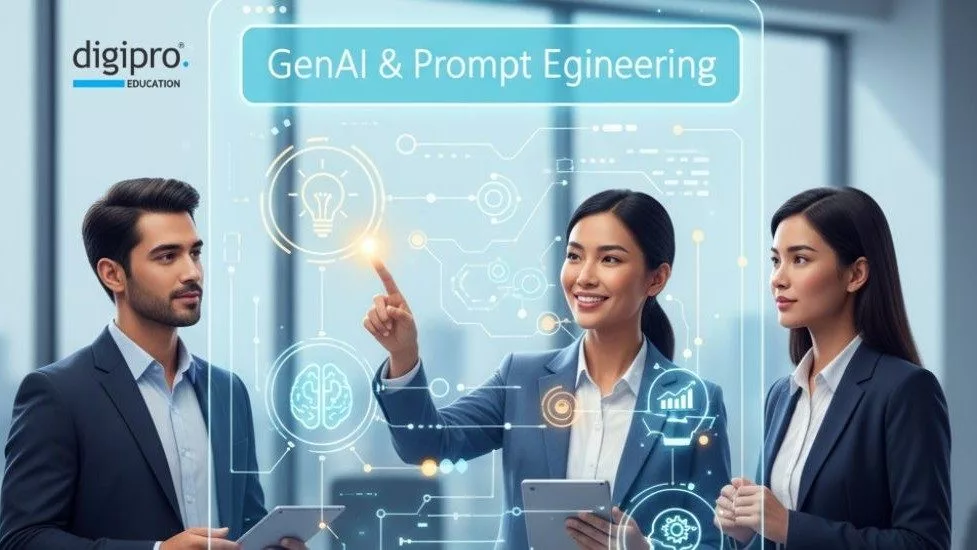
This is the promise of Generative AI (GenAI) and, more importantly, the skill that unlocks its potential: Prompt Engineering.
Why “Train Smarter, Not Harder” is the New Mantra
The phrase “Train Smarter, Not Harder” is more than just a catchy slogan; it’s a necessary pivot for survival in the current business climate. Companies are moving at the speed of light, requiring employees to reskill and upskill constantly. Traditional training methods, which rely on rigid timelines and generic content, simply cannot keep pace.
Imagine you are a master trainer responsible for a global sales team. One subgroup needs materials focused on the European regulatory framework, another on the specifics of the Asian market, and a third on advanced negotiation tactics. Manually creating three bespoke modules is a monumental task that steals time away from essential human activities: coaching, role-playing, and providing individualized feedback.
This is where GenAI steps in. It’s not about generating a full, lifeless training manual. It’s about leveraging AI to perform the initial, labor-intensive lift: drafting scenario-based role-play scripts tailored to specific regions, instantly summarizing dense compliance documents into bullet-point learning objectives, or generating ten different quiz variations to prevent cheating and ensure comprehension.
By mastering the tools of GenAI, corporate trainers reclaim their most valuable asset: their time. They move from being content factories to strategic learning architects who can finally focus on the nuances of human performance and behavioral change.
The True Skill: Speaking the Language of AI (Prompt Engineering)
Generative AI tools like ChatGPT, Claude, and specialized platforms are only as good as the instructions you give them. This is the heart of Prompt Engineering. It’s less about coding and more about precision language and strategic thinking.
Think of the difference between these two requests:
- Weak Prompt: “Write a training module on leadership skills.” (Result: Generic, academic, unusable content.)
- Effective Prompt: “Act as a seasoned corporate instructional designer specializing in adult learning theory. Develop a 15-minute module outline for middle managers at a multinational tech firm who need to transition from managing teams locally to managing dispersed, hybrid teams globally. The module must focus on ‘Trust Building in a Remote Context’ and include three specific, actionable talking points for a live discussion.” (Result: Focused, context-aware, and immediately actionable content.)
Prompt engineering is the art of giving the AI a role, a context, a constraint, and a desired output format. It’s about being explicit about your audience, your learning objectives, and the pedagogical structure. When trainers learn this “science of crafting effective AI prompts,” they transform the AI from a simple text generator into a powerful, personalized content engine.
Moving Beyond Generic: Personalization and Adaptability
One of the most profound breakthroughs GenAI offers L&D is genuine personalization at scale.
Traditional corporate training is often a one-size-fits-all approach, leaving high-performers bored and struggling learners overwhelmed. GenAI can completely dismantle this rigid structure:
- Tailoring Learning Paths: An AI can instantly analyze a pre-training assessment or an employee’s existing performance data. If a learner scores high on technical skills but low on conflict resolution, a prompt can ask the AI to “create three new micro-learning scenarios focusing specifically on handling difficult feedback sessions” and instantly integrate them into that individual’s path.
- Adaptive Content Generation: Imagine a trainer asks an AI to “Explain the new data governance policy to a marketing specialist using analogy.” The AI can respond with a comparison to “managing customer loyalty points.” Then, the trainer can immediately refine the prompt for an engineering team: “Now explain the same policy to a DevOps engineer using an analogy related to version control and secure pipelines.” The AI delivers two distinct, relevant explanations in seconds, ensuring maximum engagement and retention across different departments.
This level of adaptability means trainers can finally address the specific needs and learning styles of every single participant, moving the needle on actual business performance.
The Role of the Human Trainer is Elevated, Not Eliminated
It is a misconception that AI will replace corporate trainers. In fact, it makes their human skills more valuable than ever before. When trainers are freed from the drudgery of drafting quizzes and summarizing data, they can double down on their unique human strengths:
- Emotional Intelligence (EQ): Coaching, mentoring, reading body language, and providing empathetic support—skills no AI can replicate.
- Live Facilitation: Leading dynamic discussions, mediating conflicts in role-play, and inspiring motivation.
- Strategic Oversight: Using AI-generated insights (e.g., “75% of learners struggled with Module 4”) to refine the overall curriculum strategy, not just creating the content.
Our upcoming seminar, clearly recognizes this shift. It is structured not just to teach the tool (GenAI) but the skill (Prompt Engineering), providing master trainers with a robust framework for effective instructional design.
Navigating the Ethical and Practical Landscape
Of course, with great power comes great responsibility. Any serious discussion of integrating AI into corporate learning must address the critical questions:
- Bias and Limitations: AI models are trained on vast datasets, which inherently carry human biases. Trainers must learn how to structure prompts that explicitly counteract these biases, ensuring fairness and equity in the generated materials.
- Data Privacy and Policy: When using AI, corporate trainers need deep insights into corporate policies and best practices for data security. Which company data can be used to train private models? Which external AI tools meet internal compliance standards? This is a non-negotiable area of expertise.
- Verification: AI is a powerful generator, but it is not infallible. Trainers remain the ultimate guardians of factual accuracy. They must learn to use AI for drafting and brainstorming, followed by rigorous human oversight and verification, ensuring all training content remains truthful and aligned with organizational goals.
The Imperative to Learn Now
For L&D professionals, instructional designers, HR, and talent development specialists, the integration of GenAI is not a future trend; it’s a present necessity. Businesses that leverage this technology will be able to train their workforce faster, more effectively, and at a lower cost, gaining a significant competitive edge.
This type of seminar is specifically designed to empower master teachers—those approved by HRDA—to lead this charge. Participants will leave not just with theoretical knowledge, but with actionable insights, practical tools, and real-world case studies that demonstrate tangible success in the corporate environment.
The message is clear: Step away from the mechanical process of content creation and step into the strategic role you were meant to play. Train smarter, not harder. The co-pilot is ready; all you need to do is learn how to give the perfect set of instructions.
Note: Our upcoming seminar, is a timely opportunity to master these essential skills. Taking place online on 24 & 26 November, from 7:30 am – 3:45 pm, and being Fully Subsidized, it represents a crucial investment in the future of corporate training. For those ready to revolutionize their approach and drive business performance through cutting-edge AI technology, registering is the next logical step. Register here: https://bit.ly/TrainSmarter-NotHarder-GenAI-PromptEngineering
Contact [email protected] or call +357 26955000 to secure your spot.